

4 Surprising Ways Smoking and Vaping Sabotage Your Body’s Ability to Heal
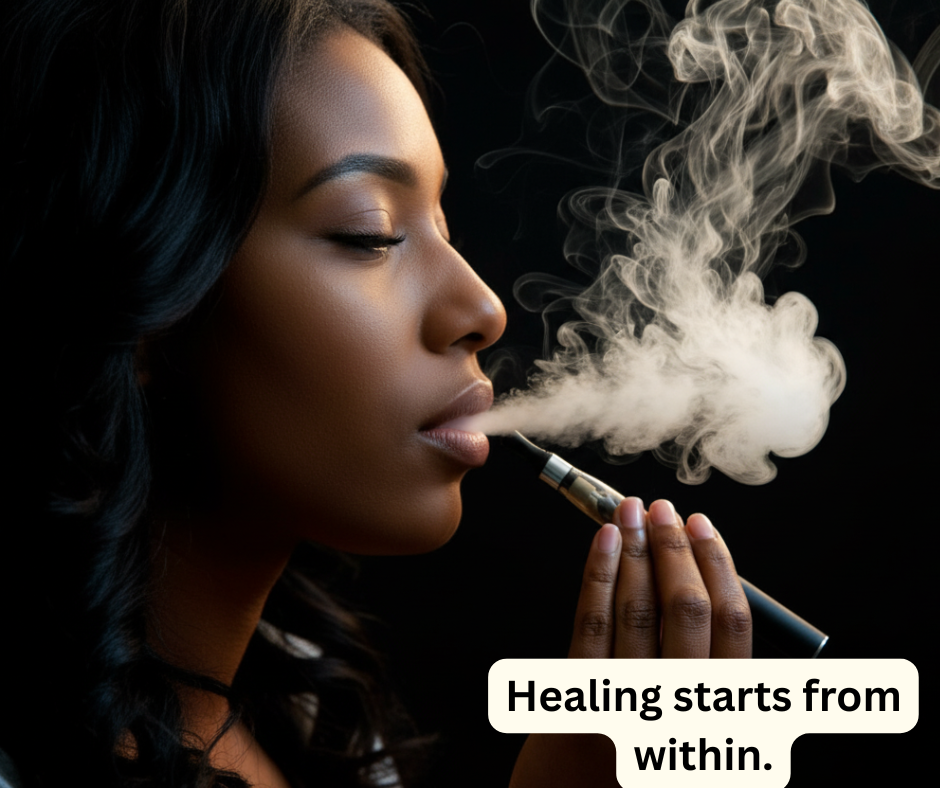 For many, vaping is seen as a “safer” alternative to traditional cigarettes—a way to step away from the well-documented harms of combusted tobacco. But the risks of both habits extend far beyond stained teeth and lung health, impacting something more fundamental: your body’s remarkable ability to repair itself after an injury or surgery.
This article reveals four of the most impactful and often overlooked ways that smoking and vaping interfere with healing. Drawing on current scientific and clinical evidence, we’ll explore how these habits sabotage your body’s repair systems in ways you might not expect.
1. Vaping Isn’t a Free Pass—It Might Even Be Worse for Cavities.
While it’s true that vaping aerosols contain fewer toxicants than cigarette smoke, they are far from harmless to your oral health. A comprehensive meta-analysis found that vaping is significantly associated with an increased risk of gum problems. Compared to non-vapers, those who vape have a 1.7 times higher risk of periodontal disease and a 1.5 times higher risk of gum recession. For context, traditional smoking carries an even higher risk for periodontal disease (2.5 times higher).
However, in a counter-intuitive twist, vaping may pose a more prominent risk for tooth decay than traditional smoking. The reason lies in the e-liquids themselves. According to research in the Maltese Dental Journal, cariogenic flavorings like sucrose and sucralose can promote the growth of acid-producing bacteria, such as the notorious cavity-causer Streptococcus mutans. Swapping smoking for vaping might mean trading one set of known oral health risks for a different, and perhaps more insidious, set of dental problems.
2. The Danger Isn’t Just Chemical—It’s Mechanical.
After a tooth is extracted, a protective blood clot forms in the empty socket. If this clot is dislodged, it can lead to a painful complication called alveolar osteitis, or “dry socket,” which exposes the underlying bone and nerves. While the chemicals in smoke and vapor contribute to healing problems, the physical act of using a cigarette or vape pen poses its own unique threat.
The suction required to inhale creates negative pressure in the mouth that can physically pull the blood clot out of the socket. As a journal article on the topic states:
“Both conventional and electronic cigarettes can dislodge the blood clot that forms at the tooth socket after tooth extraction as a result of the sucking movement involved in smoking.”
This is a crucial point: the risk is entirely separate from the chemical contents of the smoke or vapor. The very act of using these products can mechanically disrupt the healing process at a delicate post-surgical site, leading to significant pain and complications.
3. Nicotine Is a Triple-Threat to Your Body’s Repair Crew.
Beyond its addictive properties, nicotine is a systemic saboteur that actively undermines your body’s natural healing mechanisms. Whether delivered by smoke or vapor, it launches a multi-pronged attack on the systems responsible for tissue repair.
- It strangles the supply lines: Nicotine is a potent vasoconstrictor, meaning it narrows blood vessels. This reduces the flow of blood, which carries the oxygen, nutrients, and critical immune cells that your body’s “repair crew” needs to reach and mend a wound. This creates a state of tissue ischemia—a dangerous lack of blood flow—that effectively starves the wound and slows the entire healing process.
- It poisons the building blocks: Nicotine and carbon monoxide (found in both cigarettes and, in the case of vapes, produced by the thermal breakdown of e-liquid ingredients) reduce oxygen delivery to tissues. This lack of oxygen can accelerate the breakdown of the protective blood clot (a process called fibrinolysis) and impair the function of fibroblasts. These are the critical cells responsible for producing collagen, the protein that provides structure and integrity to new tissue.
- It weakens the defenses: Smoking and nicotine suppress the immune system. Specifically, they can compromise the function of neutrophils, a type of white blood cell that serves as the first line of defense against post-surgical infections. A weakened immune response leaves a healing wound more vulnerable to bacteria and complications. This multi-system attack on the body’s healing capacity isn’t limited to soft tissue, and emerging evidence suggests the consequences could be bone-deep.
4. The Damage Might Not Stop at Your Jawline.
While much of the research on smoking and vaping focuses on oral health, emerging evidence suggests that the healing problems they cause could affect the entire body. A hypothesis-generating case series published by the National Institutes of Health (NIH) documented a concerning clinical pattern in adolescent vapers.
The series detailed three cases where teenagers who used e-cigarettes experienced significant delays in the healing of bone fractures in their ankle and forearms. For example, one ankle fracture took eighteen weeks to heal, far beyond the expected four to six weeks. A forearm fracture took fifteen weeks, nearly triple the typical healing time of 5.5 weeks.
It is critical to note that these cases do not prove that vaping caused the delays, but they represent a clinical observation that warrants further investigation. This finding raises the alarming possibility that vaping’s negative effects on microcirculation and cellular repair could impair bone healing anywhere in the body, not just in the mouth. It is a powerful reminder that what we inhale can have far-reaching consequences for our entire musculoskeletal system.
Rethinking the Risks of Every Puff
The evidence is clear: the dangers of smoking and vaping extend far beyond their commonly known effects. From vaping’s unique risk for cavities and the simple mechanical danger of suction to nicotine’s systemic assault on your body’s repair systems, the impact on healing is profound. The potential for these effects to reach beyond the mouth and into the skeletal system adds another layer of concern.
Whether it comes from a cigarette or a vape, the habit is not just a long-term health gamble. It is an immediate and direct threat to your body’s remarkable, fundamental ability to heal itself. As the science on vaping continues to emerge, what other hidden impacts on our body’s fundamental processes are we yet to discover?
Comments are closed.