This hub is designed to guide and support you, from getting ready for your first appointment to understanding different aspects of oral surgery. Select a tab to learn more.
Oral and maxillofacial surgery requires additional years of hospital-based surgical and anesthesia training after dental school. As an oral and maxillofacial surgeon, Dr. Bureau manages a wide variety of problems relating to the mouth, teeth, and facial regions, with expertise ranging from dental implant surgery to wisdom tooth removal. This includes techniques designed to rebuild bone structure with minimal surgical intervention and optimal patient comfort, as well as the diagnosis and treatment of facial pain, facial injuries, and fractures.
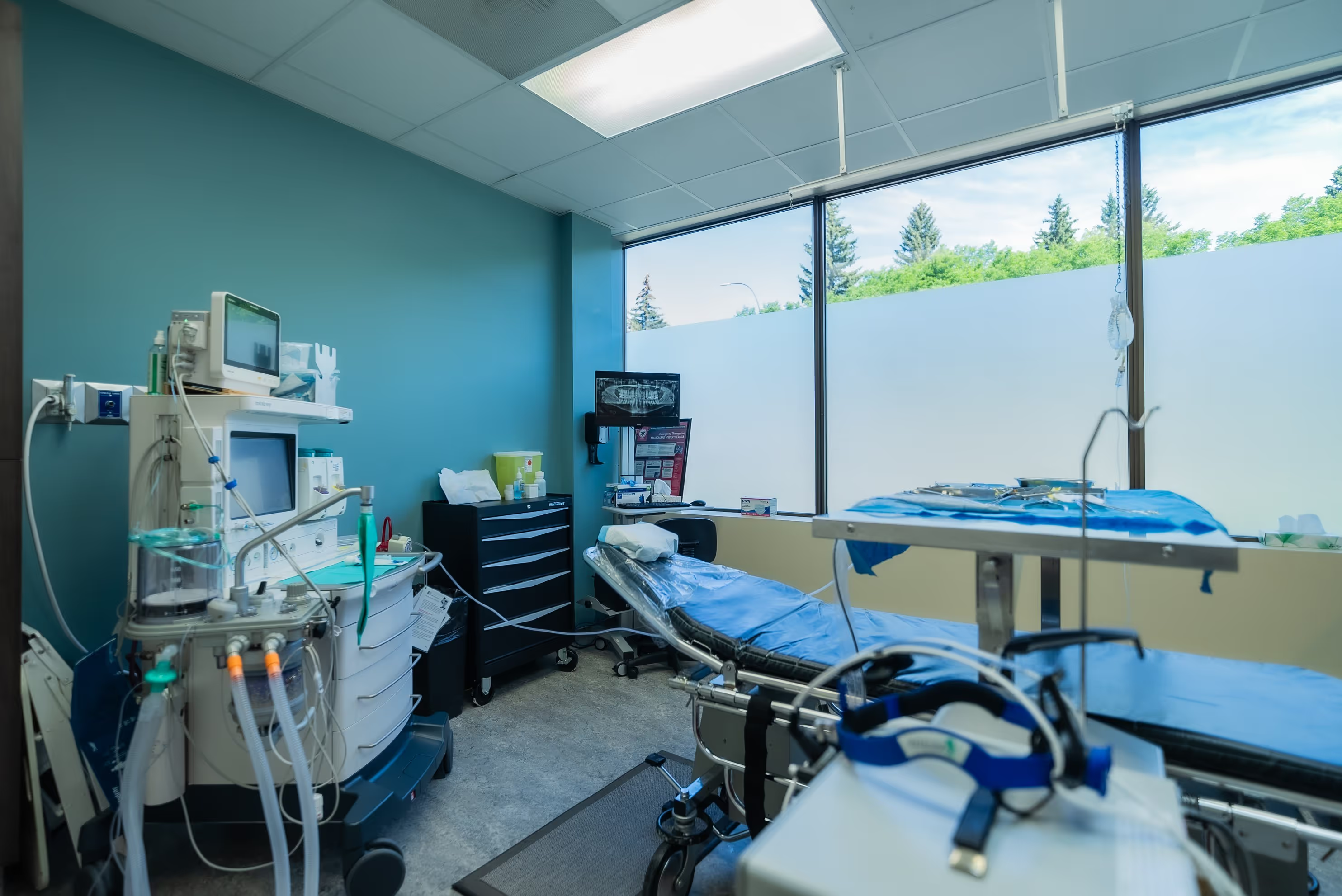
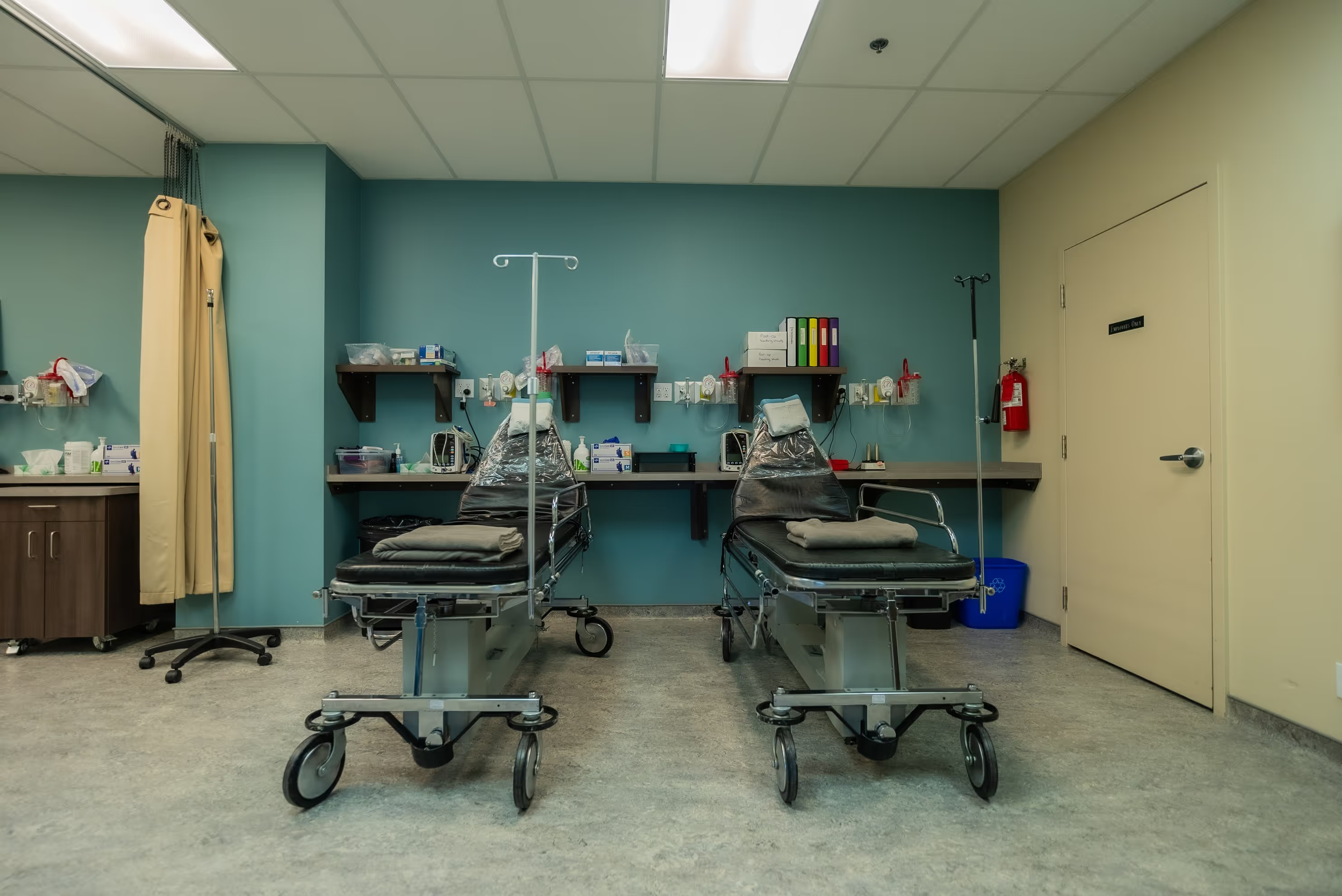
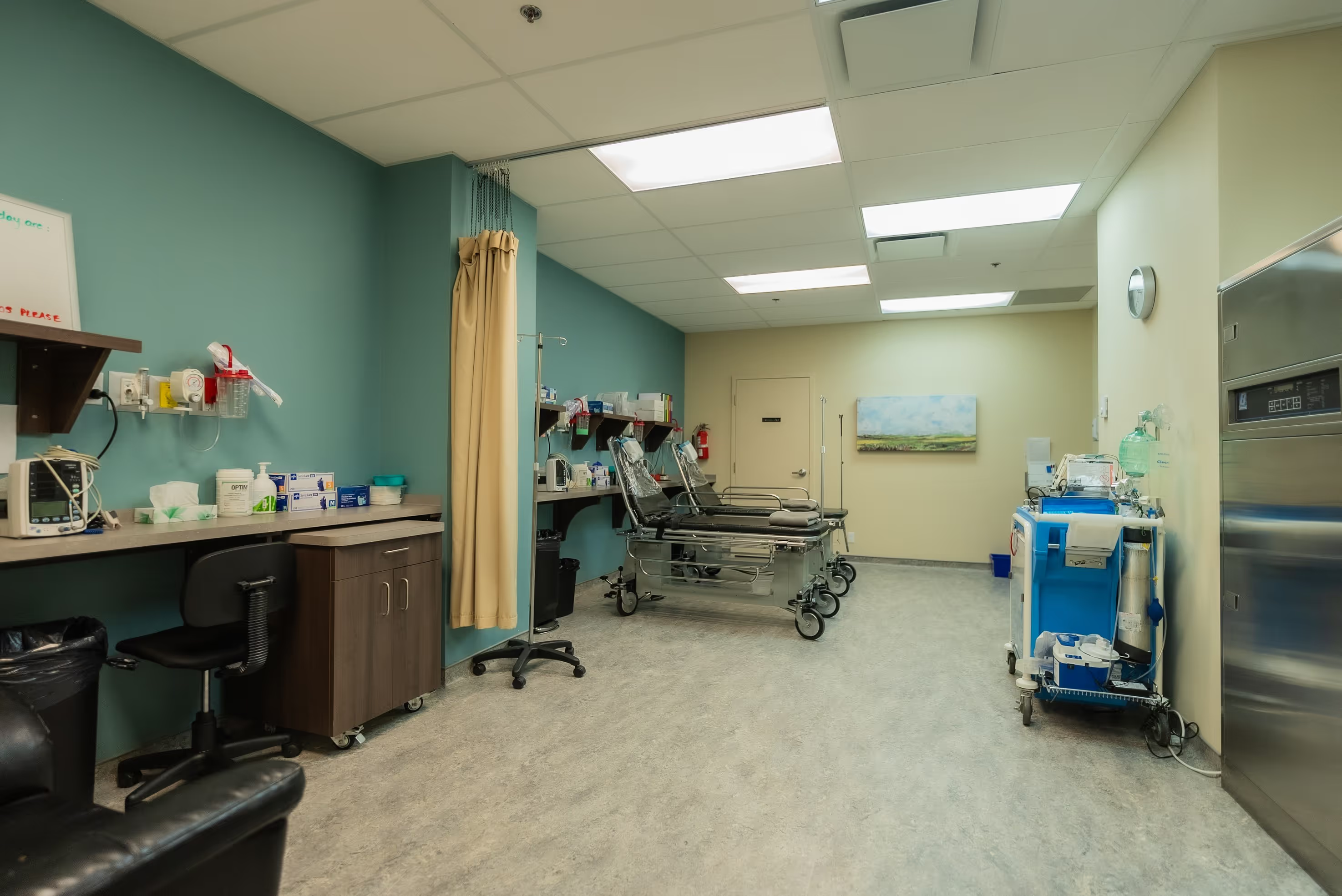
Our staff is trained to assist our medical anesthesiologist with intravenous (IV) sedation or outpatient general anesthesia in our state-of-the-art office, where patients are continuously monitored during and after surgery. Our surgical assistants are experienced, certified oral and maxillofacial surgical assistants, and a registered nurse monitors patients in our post-anesthetic recovery room. All staff are CPR certified, and our nurses and doctors are certified in Advanced Cardiac Life Support (ACLS) and Pediatric Advanced Life Support (PALS).
Your initial appointment consists of a consultation explaining your diagnosis and treatment options. Occasionally, surgery can be performed the same day as the consultation; however, a complex medical history or treatment plan will require an evaluation and a second appointment for treatment on another day.
Please bring the following to your consultation:
All patients under 18 years of age must be accompanied by a parent or guardian at the consultation visit.
A preoperative consultation and physical examination is mandatory for patients undergoing IV anesthesia or general anesthetic. Please have nothing to eat or drink the night before surgery, and arrange for an adult to drive you home and stay with you for 24 hours. Please alert the office if you have a medical condition that may be of concern (for example, diabetes, high blood pressure, artificial heart valves or joints, or rheumatic fever) or if you take any medication such as heart medications, aspirin, or anticoagulants.
X-Rays
If your dentist or physician has taken x-rays, you may request that they forward them to our office. If there is not enough time, please pick them up and bring them with you. If additional films are necessary, they can be taken at our facility. We generally prefer that x-rays are current, taken within the last year.
Depending on what you need done, oral surgery can be costly, and most of the questions we receive are about insurance. Here is a quick overview:
Insurance can be complex, and we are here to help. Please call us with any questions or concerns.
Payment is due in full on the day of the consultation. We accept Visa, Mastercard, AMEX, debit, and cash. Our office will submit a claim to your insurance for any reimbursement, which is paid to the subscriber directly. We will gladly submit a pre-authorization to your insurance provider so you know your out-of-pocket expenses for any future treatment. Because insurance companies vary greatly in coverage, please contact us at 403-286-2551 with any questions.
As a courtesy to our surgery patients, we offer direct billing and will accept assignment of up to two dental insurance benefits. We must have pre-approval from your insurance, and a signed Visa or Mastercard imprint must be left at our office. You will then only need to pay the amount not covered by your insurance on the day of surgery. Payment plans are available. Discuss with your treatment coordinator.
A minimum $250 cancellation fee will be applied if: you do not show up for surgery without notice; surgery is cancelled with less than 5 business days notice (unless for a medical reason, with a physician's note required); or pre-surgery instructions were not followed and led to cancellation, for example not having an empty stomach when instructed. To secure another surgical time, full payment must be made at least one week before surgery.
We offer different types of anesthesia in our office:
General Anesthetic
With this type of anesthetic, patients are completely unconscious during the procedure and do not feel any pain. It is usually given through inhaled medication. An anesthesiologist will administer the anesthetic and other medications, and will carefully monitor your breathing, vital functions and airway throughout the surgery.
In addition, a local anesthetic may be used to numb the specific area being treated. This helps prevent pain during and after the procedure, so the patient is comfortable when they wake up.
Intravenous (IV) Sedation
This type of sedation is given through an intravenous (IV) line by one of our anesthesiologists. It helps the patient relax and reduces or prevents pain during the procedure. It is sometimes referred to as “deep sedation.”
During the procedure, patients may feel very drowsy or fall asleep, but they are not fully unconscious and are able to breathe on their own. Many patients report having little or no memory of the procedure afterward.
Dr. Bureau will determine the most appropriate anesthetic option for you during your consultation, based on your medical history, age, and any relevant risk factors. Patient safety is always the top priority when making this decision. We encourage you to ask any questions during your consultation so you fully understand the recommended anesthetic plan and feel comfortable with your care.
If a local anesthetic is a suitable option for your procedure, Dr. Bureau will discuss this with you at that time.
To ensure procedures are safe and go smoothly, it is important to follow the pre-surgery instructions provided.
While our clinical team is always here to guide you through your surgical journey, staying informed about your oral health and treatment options is an important part of your care. For verified educational materials, provincial guidelines, and national standards of care, we recommend exploring the official resources provided by our industry’s leading regulatory and professional organizations.
CAOMS (Canadian Association of Oral and Maxillofacial Surgeons)
The national voice for oral and maxillofacial surgical specialists in Canada, offering dedicated patient education on procedures like dental implants, wisdom teeth extraction, and corrective jaw surgery. Visit CAOMS
AAOMS (American Association of Oral and Maxillofacial Surgeons)
An excellent North American resource providing comprehensive, patient-friendly insights, procedural deep-dives, and safety standards for conditions affecting the face, mouth, and jaw. Visit AAOMS
CDSA (College of Dental Surgeons of Alberta)
The regulatory and governing body for all dentists in Alberta. This link is vital for understanding provincial dental standards, ethical practice guidelines, and patient safety rights. Visit CDSA
CPSA (College of Physicians & Surgeons of Alberta)
The provincial regulator ensuring high-quality medical and surgical practice across Alberta. A helpful resource regarding surgical facility accreditation and medical standards. Visit CPSA
CDA (Canadian Dental Association)
The national organization for the dental profession in Canada, offering broad public resources on general oral health, specialized care definitions, and overall wellness. Visit CDA
Please Note: These links are provided for general educational and informational purposes only. They are intended to supplement, not replace, the personalized medical advice, diagnosis, or treatment plan provided during your consultation.
Begin with 15 minutes of moist heat to the jaw area to help relax the muscles. Then, follow along with the linked video, focusing on Exercises 1 and 2. Complete the exercises slowly and gently, and stop if you experience any pain or discomfort.
These exercises are intended for patients who have been advised to do them by our team. If you have questions about whether they’re right for you, please call the clinic.
Call or submit online — we make the referral process simple.